
Can we talk about Piedmont for a minute?
Because when people tell me they’re going to Italy for the food, I hear a lot about Tuscany. And Rome. And Bologna.
All excellent choices. But Piedmont? It needs to be in the conversation!!!
This is the region where I lived in the Alps, Turin and studied Italian gastronomy in Pollenzo. Piedmont is where I fell in love with Italian food. Food was part of my education, my work and my everyday life. So yes, I have a slight personal attachment.
Ask me what I still think about, and the answer comes pretty quickly… Agnolotti del plin steaming on the plate. Gianduja melting in my mouth. Cheese with flavors I’ve never experienced before. And the panna cotta at Boccondivino in Bra—smooth as silk.
If you’re wondering what to eat in Piedmont, here’s where I’d start.
Give the Antipasti Some Attention
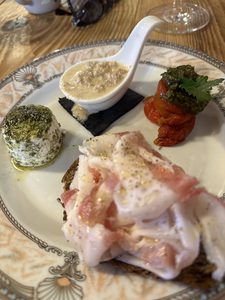
It’s tempting to skim straight to the pasta. I understand. But Piedmont’s starters deserve a place on the plate. Some of the local favorites are:
Vitello tonnato is thinly sliced cooked veal served cold with a tuna-based sauce.
Veal and tuna. Together.
I know it might sound odd, but please give it a chance if you eat both. It makes much more sense on your fork and on your palat than it might in an English menu description.
You might also see acciughe al verde, anchovies with a green herb sauce, insalata russa (Italian potato salad) or a flan di verdure, a savory vegetable flan. The antipasti misti is my go to and an excellent way to try 3 or 4 starters (perfect to share!).
Two pasta names to remember: Tajarin and Plin
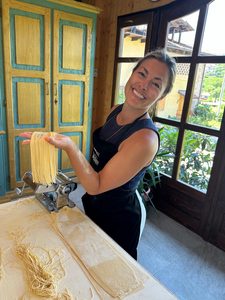
Tajarin (tah-yah-REEN) are fine ribbons of fresh egg pasta with a rich yellow color. Think much thinner than tagliatelle.
You’ll find them with meat sauces or, when available in season, white truffle. But don’t feel that they need truffles to be worth ordering. The texture of the pasta and the richness of the eggs are a pleasure in themselves.
Then there are agnolotti del plin, one of the dishes I most associate with eating in the Langhe (and also at Christmas). My mother-in-law makes 300 to fill the whole family Christmas day!
These small stuffed pastas traditionally have a meat-based filling. The plin refers to the little pinch used to close them in Piemontese dialect. Roast-meat juices or butter and sage are classic accompaniments.
If you’re vegetarian, ask about the filling as well as the sauce. Butter and sage on the outside doesn’t tell you what’s inside!
Bagna cauda requires a commitment to garlic
Bagna cauda is a warm sauce made with garlic, anchovies and oil, served with raw and cooked vegetables for dipping. A must-try if you find yourself there during a cool-weather visit: strong, savory flavors, vegetables to dip, and a meal to settle into.
It took me a few years to warm up to this one, but it soon became one of my favorite fall/winter dishes. It was also how I found out that many Italians are “allergic” to garlic. Many of them wont eat it because they don’t want to smell like garlic the next day.
And then there’s the Cheese
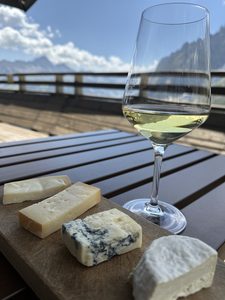
I cannot talk about Piedmont’s food and leave out the cheese.
Castelmagno, Robiola di Roccaverano, Raschera—these are names worth noticing on menus and at cheese counters. A cheese plate gives you a chance to compare styles, and asking the person serving you to choose a few contrasting cheeses is a good place to start.
Bra belongs in this conversation, too, especially for its Cheese fair. Between studying in nearby Pollenzo and my love of cheese, this part of Piedmont has a very particular place in my heart.
If a food event is something you’d like to build a trip around, check the dates before making plans. Otherwise, you can still make room for cheese shops, market stalls and a very worthwhile conversation about what to taste.
Turin: Gianduja and Bicerin
Gianduja is another of my Piedmont weaknesses: that combination of chocolate and hazelnuts. I know you might be thinking, “That sounds like Nutella”, well yes…but 1000 times better!
In Turin, you must try a gianduiotto (mini Gianduja), which is the small chocolate associated with the city’s long time chocolate-making tradition. Please reach out if you want a recommendation of where to go to taste or make them! If you are a real chocolate fan, Turin also has a chocolate museum, where you can learn all about how gianduja came about (yes, I have been there!).
As you stroll along the many cafe’s in Turin make sure you look for a bicerin, a traditional drink combining coffee, chocolate and cream, served in a glass so you can see the layers.
Resist the urge to stir it. Let them come together as you drink.
The dessert I still think about
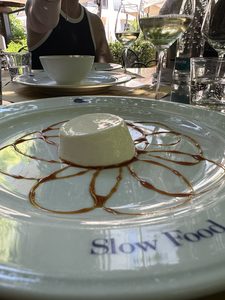
The panna cotta at Boccondivino in Bra is the one I remember.
It’s like silk. That’s the best way I can describe it. Everyone I bring to the restaurant who tries it agrees…it is the best panna cotta on Earth.
Panna cotta can sound like a fairly simple dessert, but the texture makes all the difference. This is exactly why I wouldn’t pass over something just because its name looks familiar.
There are other desserts to look for, too. Bonèt, also written bunèt, is a traditional pudding with cocoa and amaretti. In the Langhe region, torta di nocciole, hazelnut cake, is another regional specialty. (You must try the Nocciola Tonda Gentile delle Langhe, it is protected and is widely considered one of the finest hazelnut varieties in the world!)
Eat in Season
Piedmont is often associated with autumn and white truffles. They’re part of the region’s food culture, but they don’t need to be the centerpiece of every meal—or every visit. Availability varies, and some restaurants are definitely better than others. If you need restaurant recommendations for white truffles please send me an email! I know where to send you!
A useful question at any time of year in Italy is:
Che cosa mi consiglia di tipico e di stagione?
What would you recommend that’s local and seasonal?
It gives the person serving you something more interesting to work with than “What’s good?” You might discover a preparation or ingredient you hadn’t thought to look for.
Make room for a few good meals
For a first visit, I’d spread these experiences out: antipasti and pasta at one meal, a café stop in Turin, a cheese tasting, something seasonal, and dessert when the right one appears.
You don’t need to order an antipasto, primo, secondo, contorno and dolce every time you sit down. Ask about portions and choose according to your appetite.
Most of all, leave enough time in your itinerary to enjoy eating here. Food was a huge part of my life in Piedmont, and it’s one of the reasons I love sharing this region.
The agnolotti, the chocolate, the cheese—and yes, that panna cotta. I’d happily make room for all of them again.
If food is one of the reasons you’re going to Italy, let’s plan a trip that makes room for it.
A presto! – Nicole

